
You can size most meals with three things you already own: your hand, a katori and a measuring spoon. Check each one against a measuring cup once, and after that you can estimate a portion in a few seconds, with no scale.
Why do portions matter more than the dish?
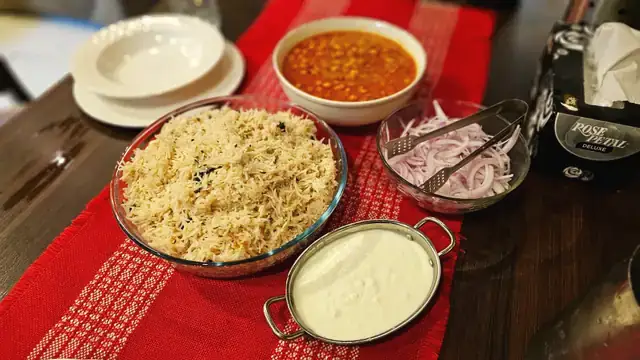
Two plates of dal rice can be the same dish and still differ by a few hundred calories. Cooked white rice is about 130 kcal per 100 g, so 150 g of cooked rice is near 195 kcal and 300 g is near 390 kcal. The recipe is the same. The plate is not.
How do you check your katori once?
Katoris differ from one steel set to the next. Fill yours to the brim with water, pour it into a measuring jug and note the millilitres. Then fill it level with cooked rice and, if you can borrow a scale once, note the grams. You will not need the scale again, because the katori now stands in for it.
What can your hand tell you?
Hands are less exact than a katori, but they are always with you.
- Palm, without the fingers: roughly one serving of cooked paneer, chicken or fish, about 80 to 100 g.
- Closed fist: roughly one cup of cooked rice or cooked vegetables.
- Cupped palm: roughly a small handful of nuts or roasted chana, about 25 to 30 g.
- Thumb: roughly one tablespoon of ghee, curd or chutney. The tip of the thumb is about one teaspoon.
How much oil is one spoon?
One teaspoon of oil is about 5 ml and about 40 kcal. A tadka made with four teaspoons carries 160 kcal before the vegetables go in. Measure the oil into a spoon over the kadai for a week and you will learn what your usual pour is.
Does the plate method work for Indian meals?
Yes. Picture the thali in three parts: about half for vegetables and salad, about a quarter for protein such as dal, paneer, egg or fish, and about a quarter for rice or roti. It is a starting point. A dietitian may change the split for your goal. The WHO healthy diet fact sheet and the ICMR-National Institute of Nutrition publish the wider guidance this idea comes from.
Should you measure raw or cooked food?
Measure the food the way you will eat it. Rice and dal take on water as they cook, so a cup of raw rice and a cup of cooked rice are very different amounts. When a recipe or plan quotes a number, ask whether it means raw or cooked.
Where can you see portions and calories for a meal?
The dishes on our Lunchbox and other plan pages show calories and protein for each dish, which gives you a plate to compare your own cooking against. Our Know your numbers tool estimates your daily calories and protein.
See your own numbers.
Take two minutes with the calculator, or ten minutes with a dietitian. Either way, there is no pressure.